Behavioral health providers manage a wide range of workforce situations that need careful follow-through. One of the most sensitive is employee accommodations. A team member may need schedule adjustments, modified duties, workplace supports, temporary restrictions, or documented follow-up after a medical recommendation. When those details are tracked through scattered emails and side notes, HR teams can lose visibility fast.
Employee accommodation tracking software gives organizations a structured way to document requests, manage deadlines, coordinate approvals, and keep supervisor communication aligned. For behavioral health agencies, that matters because workforce changes often affect client coverage, supervision plans, site assignments, and compliance documentation at the same time.
Key Takeaways
What Is Employee Accommodation Tracking Software?
Employee accommodation tracking software is a system used to organize workplace accommodation requests and the actions tied to them. It can help HR teams capture the request date, the type of accommodation under review, required documentation, temporary or ongoing restrictions, decision history, follow-up dates, and any related employee file updates.
In behavioral health settings, accommodation management is rarely isolated to HR alone. A request may affect supervisor planning, work location, training expectations, schedule coverage, or documentation responsibilities. Software makes that process easier to manage by giving teams one place to track what has been requested, what has been approved, what is time-bound, and what still needs action.
Why Accommodation Tracking Matters in Behavioral Health
Behavioral health providers often operate across multiple programs, service lines, and sites. Staff roles can involve direct care, community visits, documentation expectations, crisis response, and role-specific training. When an accommodation changes how or where an employee works, the organization needs a reliable way to coordinate those details without exposing private information more broadly than necessary.
Manual processes make that harder. HR may have one set of notes, a supervisor may have another version of the plan, and operations may only know that coverage changed. Without a shared workflow, review dates are easy to miss and employee files can become incomplete. That creates operational strain and increases the chance of inconsistent handling.
This is especially relevant for Maryland and DC behavioral health providers balancing employee support with documentation discipline. A practical tracking process helps teams respond consistently while keeping workforce records current.
Common Problems With Manual Accommodation Management
Follow-Up Dates Slip
Some accommodations are temporary, conditional, or tied to a review date. When reminders live only in personal calendars or inboxes, important follow-up steps can be missed.
Restrictions Are Shared Inconsistently
Supervisors need enough information to manage staffing appropriately, but teams also need to avoid broad, informal sharing. Manual communication often creates confusion about what was actually approved and who was informed.
Employee Files Become Incomplete
Supporting documents, notes, and approval history may end up spread across email threads, local folders, or paper files. That makes it difficult to confirm the full record later.
Coverage Planning Gets Disconnected
If a workplace accommodation affects schedule patterns, travel expectations, or direct service assignments, operations and HR need coordinated updates. Without a shared process, staffing adjustments become reactive.
What to Look for in Employee Accommodation Tracking Software
Centralized Request Records
The system should help HR capture each request in a structured record with dates, status, related documents, and assigned follow-up steps.
Review Date and Deadline Tracking
Accommodation workflows often require reassessment. Software should make review dates visible so temporary plans do not continue without oversight or expire without action.
Document Management Inside the Employee File
Supporting forms and notes should stay connected to the employee record instead of sitting in disconnected folders. That improves continuity and reduces search time later.
Controlled Visibility
A strong system supports role-based access so sensitive details are limited to the people who need them while still allowing operational coordination where appropriate.
Workflow Accountability
Teams should be able to see who owns the next step, whether documentation is complete, and which requests are still pending. Clear ownership reduces delays and inconsistent handling.
Best Practices for a More Reliable Process
How BUAMS HR Helps
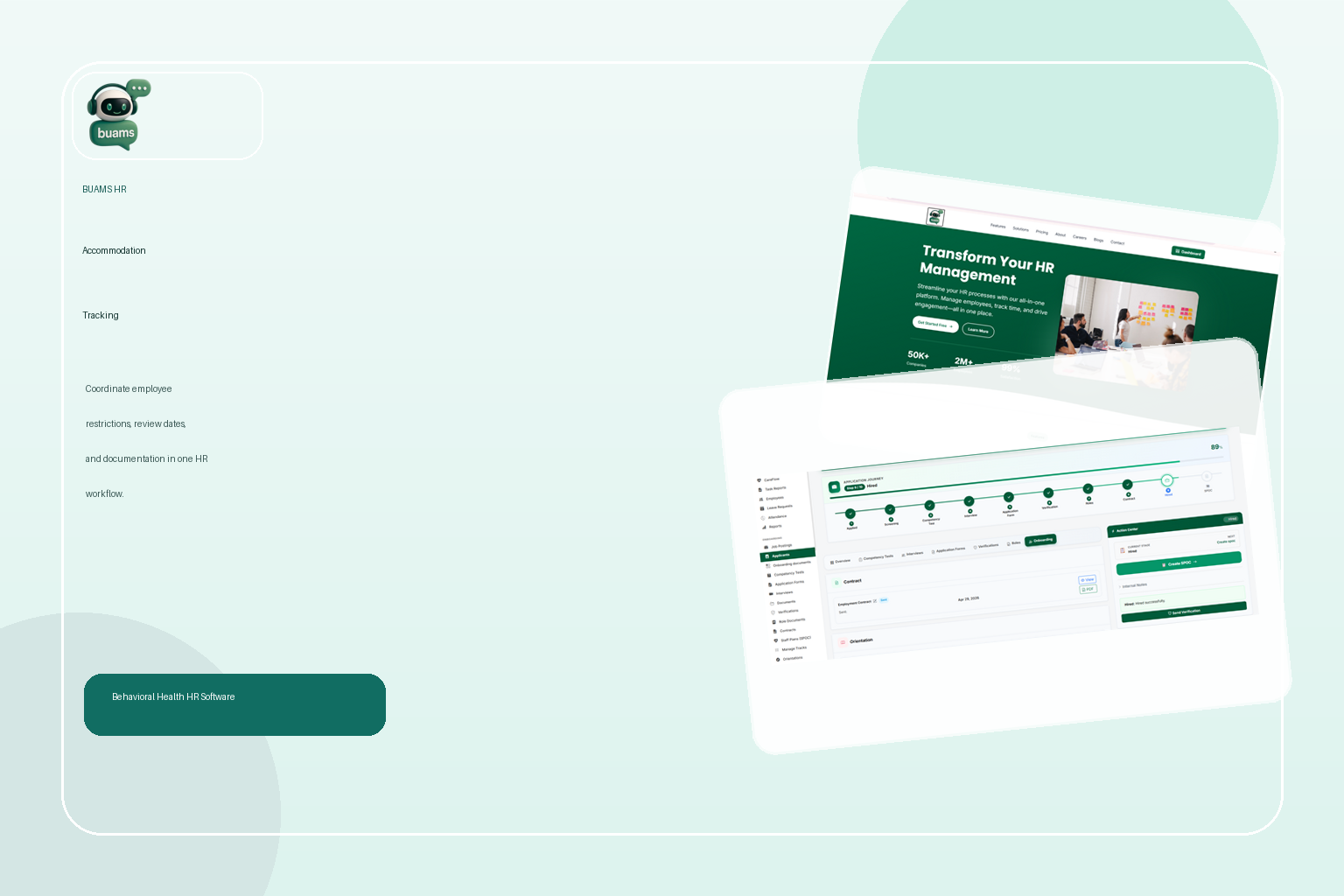
BUAMS HR helps behavioral health organizations keep workforce documentation organized in one system, which makes sensitive processes easier to manage with consistency. When HR teams need to track employee accommodations, supporting files, review dates, and related follow-up actions, centralized records reduce the confusion that comes from fragmented tools.
That is valuable for providers coordinating across multiple supervisors, locations, and workforce requirements. Instead of relying on separate spreadsheets or email trails, teams can maintain better visibility into employee records, deadlines, and operational updates tied to workforce changes.
For behavioral health organizations that want more dependable HR processes, BUAMS HR supports a more structured approach to documentation, employee file management, and ongoing compliance readiness. That helps teams stay organized while responding to employee needs with care.
Final Thoughts
Employee accommodation tracking software gives behavioral health providers a practical way to manage a sensitive process with more consistency, visibility, and follow-through. It helps HR teams keep requests, documentation, review dates, and supervisor coordination aligned instead of scattered.
For organizations trying to reduce manual risk without losing flexibility, a structured accommodation workflow is a meaningful improvement. It supports better employee recordkeeping, cleaner communication, and a more reliable response when workforce needs change.