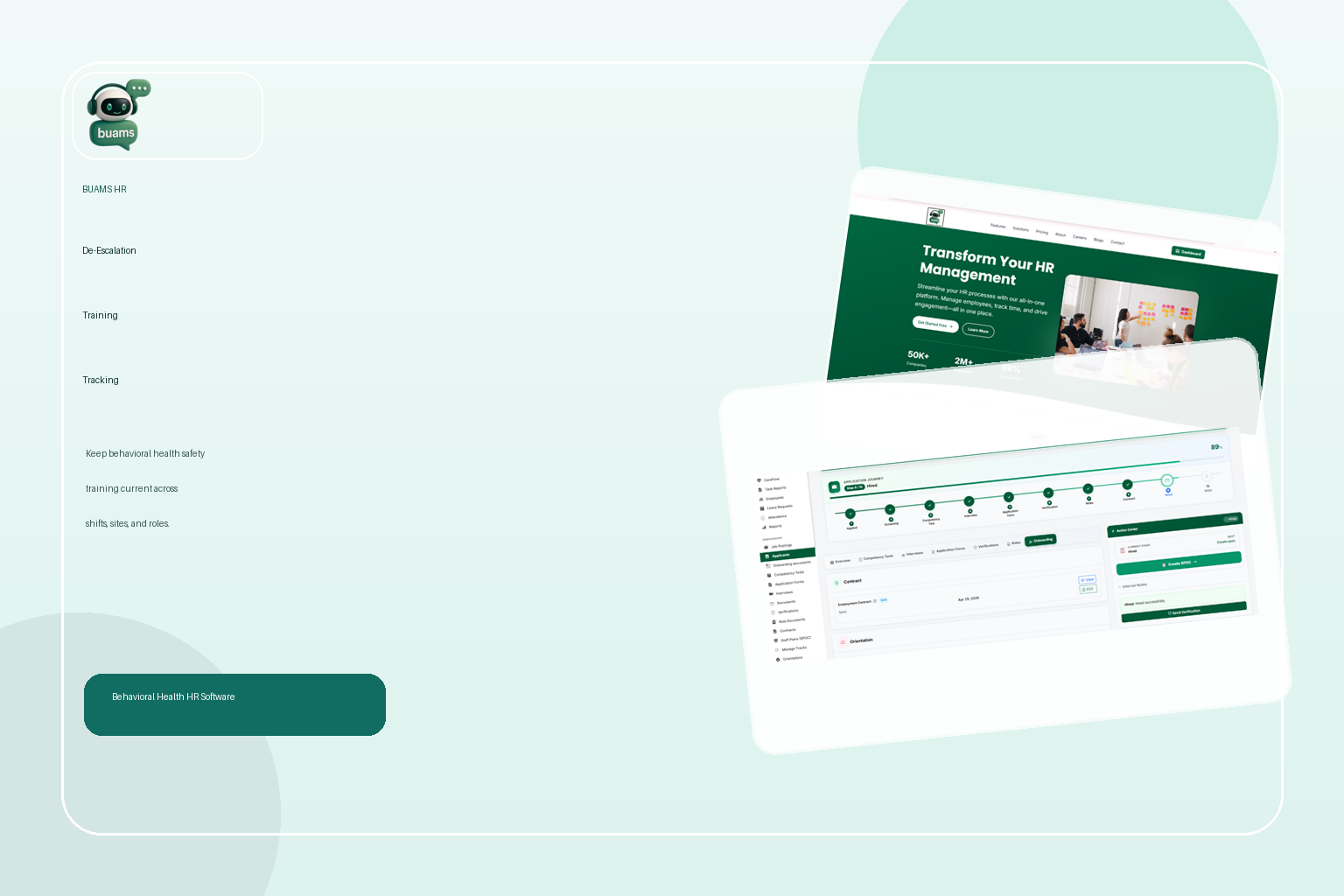
Behavioral health providers ask staff to work in high-stress environments where clinical judgment, communication, and safety practices all matter in the same moment. De-escalation training is part of that foundation, but many organizations still track completion with spreadsheets, email reminders, paper sign-in sheets, or disconnected learning records. That makes it harder to know who is current, which roles need which version of training, and whether supervisors can prove staff readiness during an internal review or external audit. De-escalation training tracking software gives HR and operations teams a more reliable way to organize these requirements before small gaps turn into staffing or compliance risk.
In behavioral health settings, de-escalation training is not just another class on the calendar. It affects employee preparedness, client safety, supervisor confidence, and site-level risk management. If the organization cannot quickly confirm who completed required training, who needs refresher work, and which employees should not be assigned to certain environments until they are current, leaders are left making decisions with incomplete information. A stronger process brings those records into one visible workflow.
Key Takeaways
What Is De-Escalation Training Tracking Software?
De-escalation training tracking software is a system that helps organizations manage required safety training from assignment through completion, renewal, and follow-up. Instead of storing attendance rosters in one place, certificates in another, and expiration reminders in a third, the software creates a single record of what each employee needs, what they completed, and what action is due next.
For behavioral health providers, that often includes more than a simple completed or not completed flag. Different roles may need different training levels. Some programs may require refreshers on a shorter cycle. New hires may need the training before independent client contact, while supervisors may need additional documentation to confirm coaching or observation. Good software gives the organization a structured way to manage those differences without building a fragile manual process.
Why It Matters for Behavioral Health Providers
Behavioral health providers operate across outpatient clinics, residential settings, crisis programs, school-based services, and community support environments. The situations employees face are not identical, which means training expectations often cannot be one-size-fits-all. A counselor in one program, a residential staff member on an evening shift, and a supervisor covering multiple locations may each need different timing, evidence, or follow-up.
When de-escalation training is tracked manually, organizations tend to discover problems late. A supervisor may realize a refresher lapsed only after a staffing schedule is already built. HR may have to chase proof of completion right before an audit. Leadership may assume a site is fully prepared when the underlying records are incomplete or spread across multiple systems. In a field where safety readiness matters every day, those delays create avoidable strain.
There is also a documentation issue. Behavioral health organizations are often expected to show not only that training exists, but that it was assigned appropriately, completed on time, and retained in a reviewable format. If evidence lives in email attachments or department-specific trackers, the organization can lose confidence in its own records. Software helps standardize how proof is captured, stored, and reviewed.
Where Manual Tracking Breaks Down
Most behavioral health providers already know de-escalation training matters. The problem is usually not intent. The problem is that the process depends on too many separate handoffs.
These gaps create both operational and compliance problems. The operational problem is that staffing decisions become harder because readiness is unclear. The compliance problem is that even when training happened, the organization may struggle to prove it quickly and consistently.
What to Look For in De-Escalation Training Tracking Software
The right system should support more than attendance logging. It should help behavioral health providers connect safety training to workforce readiness, oversight, and documentation quality.
Role-based assignment rules
Not every employee needs the same training at the same interval. Strong software should let teams assign de-escalation requirements by job title, program, location, or employment type so expectations stay consistent as staff move through the organization.
Renewal and refresher visibility
Organizations need a simple way to see upcoming due dates, expired completions, and employees who should be blocked from certain assignments until training is current. Visibility matters most before a lapse disrupts coverage.
Centralized proof and file retention
Certificates, sign-in records, course details, and related documentation should be easy to store with the employee record. That makes internal reviews and external requests far easier to handle.
Supervisor-ready dashboards
Supervisors should not need to email HR every time they want to confirm readiness. Clear dashboards or filtered views help managers see whether their team is current and where follow-up is needed.
Workflow support for exceptions and follow-up
Sometimes training is missed, rescheduled, or replaced with a different approved format. Software should help teams document exceptions, assign follow-up, and preserve an audit trail instead of relying on informal side notes.
How Better Tracking Improves Daily Operations
When de-escalation training data is reliable, organizations make better workforce decisions. HR can launch new hires with clearer readiness milestones. Supervisors can review which staff are fully prepared for higher-acuity settings. Site leaders can spot patterns, such as one location falling behind on refreshers or one role group needing repeated scheduling support.
Better tracking also reduces last-minute scrambles. Instead of discovering missing documentation right before an incident review, payer visit, or accreditation survey, teams can work from a current record. That lowers administrative friction and helps the organization respond with more confidence when someone asks for proof.
Over time, a structured process can also improve training quality. When leaders can see completion trends, overdue clusters, and recurring exceptions, they can fix scheduling problems, adjust onboarding timelines, or strengthen accountability at the supervisor level. The software does not replace good leadership, but it gives good leaders clearer signals.
How BUAMS HR Helps
BUAMS HR helps behavioral health providers bring employee records, compliance workflows, and workforce documentation into one organized system. That matters for de-escalation training because the requirement should not live in isolation. It is connected to onboarding, role readiness, site assignment, supervision, and ongoing employee file management.
With BUAMS HR, organizations can keep required training records aligned with the employee file, reduce manual follow-up, and create a cleaner process for reviewing who is current and what evidence is on file. That gives HR and operational leaders a more practical way to manage safety readiness across programs instead of chasing updates through email threads or local spreadsheets.
Because BUAMS HR is built for behavioral health workforce management, it also supports the broader compliance picture. Teams can connect training expectations with job roles, renewals, and documentation standards so readiness is easier to monitor before gaps affect staffing, quality, or audit response.
Final Thoughts
De-escalation training tracking software gives behavioral health providers a more dependable way to manage an important safety requirement without relying on disconnected records. When teams can see assignments, completions, renewals, and proof in one workflow, they reduce uncertainty and strengthen day-to-day readiness.
For organizations trying to protect staff, support supervisors, and keep compliance evidence review ready, better tracking is more than an administrative convenience. It is a practical control. The clearer the training record, the easier it becomes to schedule with confidence, respond to reviews, and keep workforce safety expectations consistent across shifts and sites.