Internal moves are easy to underestimate. A promotion, transfer, coverage change, or shift from one program to another can look simple on paper, but for behavioral health organizations it usually affects supervision, access, required training, credentials, and the employee file all at once. That is why role transition tracking software matters. Instead of managing each change through separate emails, spreadsheets, and reminders, HR teams can coordinate the full workflow in one place and reduce the chance that a role change creates a compliance gap.
For behavioral health providers, role transitions often touch clinical readiness as much as HR administration. A staff member may move between locations, begin supervising others, take on documentation duties, or need new policy acknowledgments and role-based training before the change is complete. When those details are handled inconsistently, organizations can end up with missing approvals, outdated job records, or employees working in roles that are not fully documented.
What role transition tracking software should cover
Good role transition tracking software helps HR teams manage more than a title update. It should give organizations a structured way to launch, approve, document, and verify each internal move so the employee, supervisor, and compliance team all stay aligned.
Why internal role changes create hidden HR risk in behavioral health
Behavioral health organizations frequently operate across multiple programs, service lines, and locations. A counselor may move into a lead role, a program assistant may begin handling onboarding tasks, or a clinician may transfer to a site with different documentation and credential expectations. Each of those changes can affect which forms belong in the employee file, which policies must be acknowledged, which supervisor is responsible for oversight, and which deadlines need to be monitored going forward.
The risk is not always obvious on day one. Problems usually show up later when an audit, accreditation review, file review, or internal investigation reveals that one part of the transition was never completed. Maybe the employee kept access they should not have retained, maybe a required training assignment was missed, or maybe the file still reflects the old role long after the new duties began. In fast-moving environments, these gaps happen because the transition workflow lives in too many places at once.
A structured process helps HR teams slow down the right parts of the change without slowing down the business. The goal is not extra bureaucracy. The goal is to make sure every role transition has the same baseline controls, even when the organization is growing quickly or moving staff to meet service demand.
What strong role transition workflows include
The best workflows break internal moves into a clear series of checkpoints. That makes it easier to see what is pending, who owns each step, and whether the employee is truly ready for the new assignment.
Approval controls before the role change takes effect
Before a role transition is finalized, HR should be able to confirm that the right leaders reviewed it. Depending on the move, that may include the direct supervisor, program leadership, HR, operations, payroll, or compliance. A good process also captures the intended effective date so downstream tasks can be scheduled correctly instead of being handled after the fact.
File, training, and credential updates tied to the new role
Role transitions often require changes to the employee record that are easy to miss if HR only updates the title field. New duties may require revised job descriptions, added credentials, updated continuing education expectations, or new onboarding items for the destination program. If the organization uses program-specific forms or checklists, those should also be tied directly to the transition workflow.
Access changes and accountability after the move
One of the biggest weaknesses in manual transition processes is access control. Employees who change programs or responsibilities may need different system permissions, different document visibility, or a new supervisor relationship inside HR software. If those updates are not part of the same workflow, organizations can end up with the wrong people approving tasks or the wrong access remaining active longer than intended.
How BUAMS HR helps behavioral health organizations manage role changes
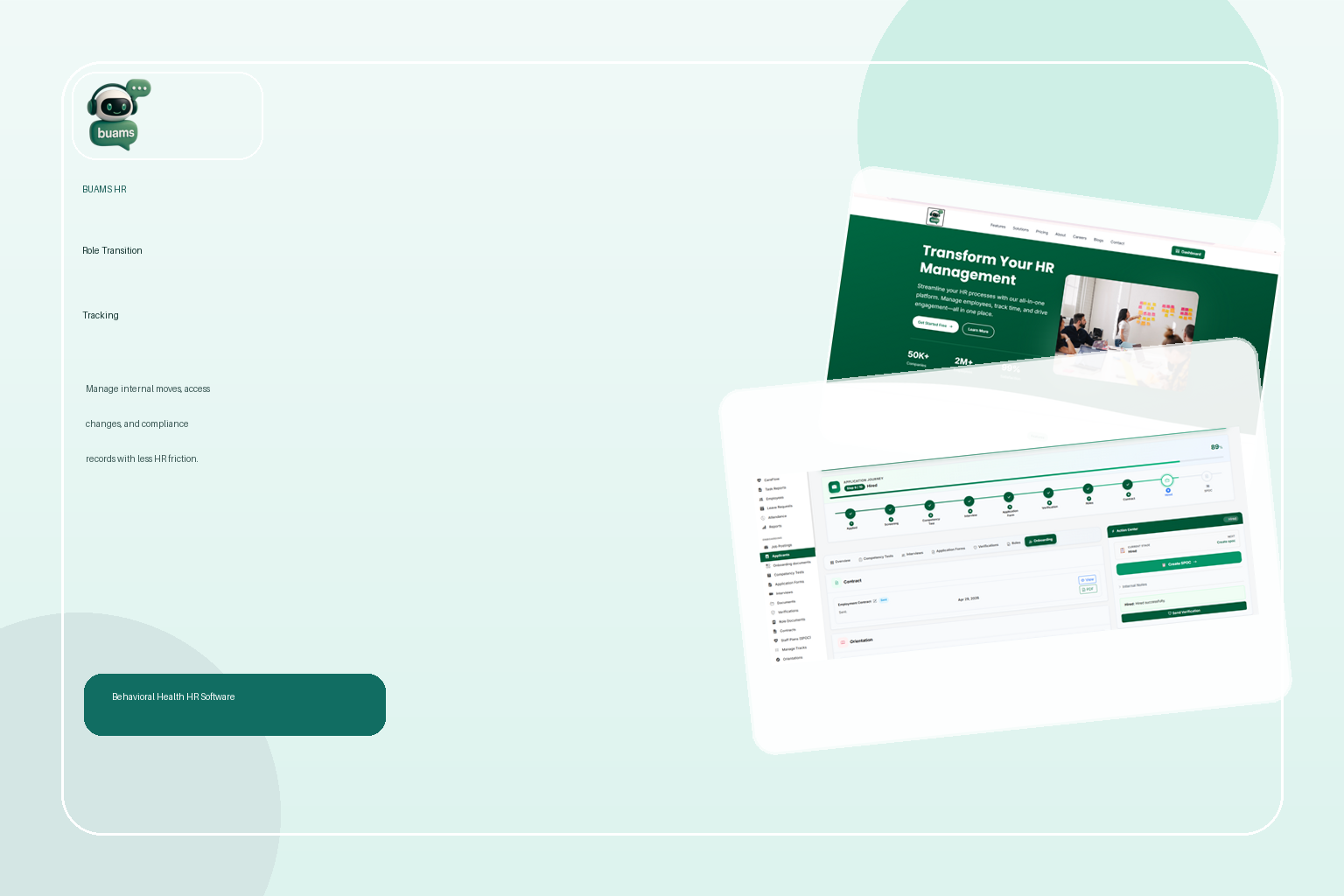
BUAMS HR gives behavioral health HR teams a practical way to manage internal moves without relying on disconnected spreadsheets or inbox follow-up. Instead of treating a transfer or promotion like a one-line record change, teams can organize the related documentation, approvals, and compliance tasks in one system.
That matters especially for organizations balancing clinical operations with strong HR controls. When internal moves are documented consistently, providers can adapt staffing more quickly without losing confidence in file quality, readiness, or oversight.
Final thoughts
Behavioral health organizations do not just need a record of who changed roles. They need a dependable way to prove that every related approval, file update, training requirement, and accountability change was handled at the right time. Role transition tracking software helps make those internal moves visible and manageable. For teams that want cleaner workforce operations and fewer surprises during audits or file reviews, a structured transition workflow is a worthwhile upgrade.